All articles · Health article ·
Diphtheria: understand, prevent, act together
A contagious infectious disease caused by Corynebacterium diphtheriae. A grey pseudomembrane in the throat is an emergency. Vaccination saves lives.
AFROCARE Health Network · Health article
AFROCARE shares this sheet to help families and caregivers recognise diphtheria, seek care without delay and remember the value of vaccination. Educational content — it does not replace medical advice.
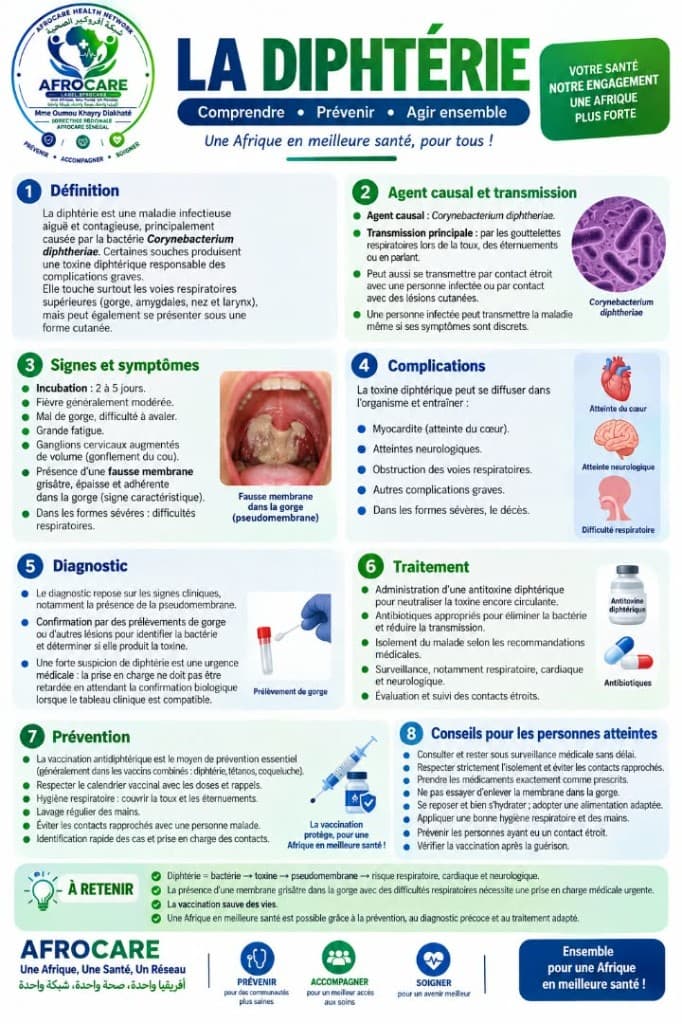
1. Definition
Diphtheria is an acute, contagious infectious disease caused mainly by the bacterium Corynebacterium diphtheriae. Some strains produce a toxin responsible for serious complications.
It mainly affects the upper airways (throat, tonsils, nose, larynx), but can also appear as a skin (cutaneous) form.
2. Causal agent and transmission
The causal agent is Corynebacterium diphtheriae. Transmission is mainly through respiratory droplets (coughing, sneezing, talking), and also through close contact with an infected person or skin lesions.
An infected person can spread the disease even when symptoms are mild.
3. Signs and symptoms
The incubation period is usually 2 to 5 days. Common signs include moderate fever, sore throat, difficulty swallowing, marked fatigue and swollen neck glands.
The characteristic sign is a thick, greyish, adherent pseudomembrane in the throat. Severe forms involve breathing difficulties.
4. Complications
The toxin can spread through the body and cause myocarditis (heart damage), neurological complications, airway obstruction, and in severe cases death.
5. Diagnosis
Diagnosis is based first on clinical signs, especially the pseudomembrane. It is confirmed with a throat swab to identify the bacteria and whether it produces toxin.
Strong suspicion of diphtheria is a medical emergency: treatment must not wait for laboratory confirmation.
6. Treatment
Treatment relies on diphtheria antitoxin to neutralise circulating toxin, appropriate antibiotics to clear the bacteria and reduce transmission, patient isolation, and medical monitoring (respiratory, cardiac and neurological).
Follow-up of close contacts is also required.
7. Prevention
Vaccination is the essential prevention method, usually with combined vaccines (DTP / diphtheria-tetanus-pertussis). Follow the vaccination schedule and boosters.
Also practise respiratory hygiene (cover coughs), wash hands regularly, avoid close contact with sick people, and identify cases quickly.
8. Advice for people who are ill
See a doctor immediately, respect strict isolation, and take all prescribed medicines. Never try to remove the membrane from the throat yourself.
Rest, stay hydrated, practise good hygiene to protect others, inform close contacts, and check vaccination status after recovery.
Key takeaways
Bacteria → toxin → pseudomembrane: the disease can lead to serious complications. A greyish membrane in the throat is a medical emergency. Vaccination saves lives.
AFROCARE — prevent, support, care. One Africa, one health, one network.
Frequently asked questions
What should trigger urgent care?
A greyish, adherent pseudomembrane in the throat, difficulty breathing or swallowing, intense fatigue with fever and swollen neck glands: see a health professional immediately.
Does vaccination really protect?
Yes. Vaccination (often combined DTP) and boosters remain the essential prevention against diphtheria. Check the vaccination schedule for the whole family.
Can you remove the throat membrane yourself?
No. Never try to remove the membrane yourself. See a doctor, isolate, and follow the prescribed treatment.
Educational content. It does not replace a consultation, diagnosis, or treatment prescribed by a health professional.