All articles · Health article ·
Heatwaves: let’s protect our health, day and night
AFROCARE prevention message: when nights stay hot, the body recovers less easily. Hydration, cooling, care for the most vulnerable and warning signs.
AFROCARE Health Network · Prevention message

In recent days, high temperatures — including at night — make heat especially hard on the body. Prolonged exposure can cause dehydration, cramps, heat exhaustion and, in severe cases, heatstroke — a medical emergency.
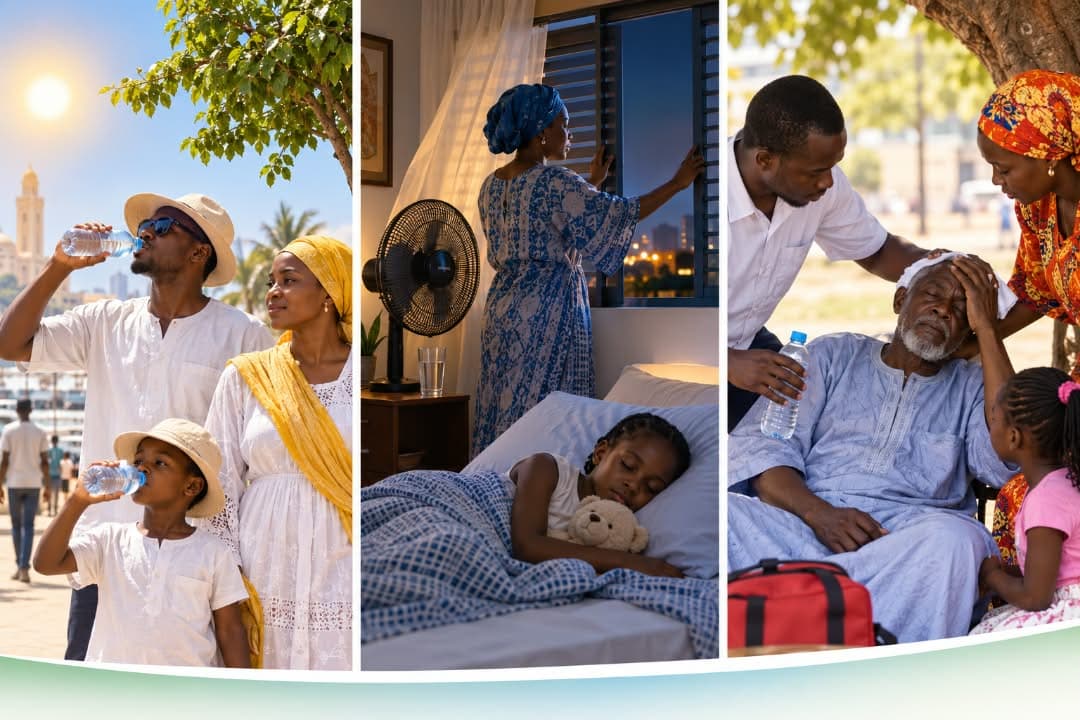
1. Hydrate regularly
Do not wait until you are very thirsty to drink. Drink water regularly throughout the day and keep water nearby, especially for children and older people.
Limit very sugary, alcoholic or highly caffeinated drinks. If you sweat heavily or do physical activity, pay extra attention to hydration.
People advised by a health professional to restrict fluid intake should seek medical advice before greatly increasing water consumption.
2. Reduce exposure to extreme heat
During the hottest periods, avoid going out and intense physical effort as much as possible. Prefer shaded, ventilated or cool places. Wear light, loose clothing suited to the heat, and protect yourself from the sun when you must go outside.
When possible, postpone demanding physical activities to cooler times of day.
- Never leave a child, a dependent person or an animal alone in a parked vehicle, even for a few minutes
3. Watch heat at night as well
High night temperatures can stop the body from recovering properly. Use light sheets and clothing, air the home when outdoor air is cooler than indoors, take a cool shower or use a damp cloth, drink regularly and choose the coolest, best-ventilated room.
During the day, limit direct sunlight entering rooms and switch off unused electrical appliances that generate heat.
4. Pay special attention to vulnerable people
Some people are more at risk of heat-related complications: infants and young children, older people, pregnant women, people with chronic illness, people with disabilities, people living alone, and those working or exercising outdoors.
Check on them regularly and make sure they have water and as cool an environment as possible.
5. Recognise warning signs
Excessive heat can cause intense thirst, headache, dizziness or severe weakness, nausea, muscle cramps, unusual fatigue or feeling unwell.
If these symptoms appear, stop activity, move quickly to a cool place, cool the body and hydrate.
Heatstroke is a medical emergency
Confusion or unusual behaviour, loss of consciousness, convulsions or abnormally hot skin may signal a serious situation. Seek medical help immediately.
While waiting for help, move the person to a cool or shaded place, remove excess clothing and begin cooling with whatever means are available.
A simple gesture can protect a life
During extreme heat, prevention is a shared responsibility. Stay hydrated. Protect children and older people. Check on those who live alone. Watch for warning signs.
Everyone’s vigilance can prevent serious complications. Afrocare — health, prevention and information serving our communities.
- These recommendations align with updated WHO advice: stay out of the heat during the hottest hours, keep housing and the body cool, drink regularly and monitor vulnerable people closely. WHO also treats heatstroke as a medical emergency.
Frequently asked questions
Why are hot nights dangerous?
When temperature stays high at night, the body recovers less easily from daytime heat. That raises the risk of fatigue, dehydration and complications, especially for vulnerable people.
When should you call for help?
If there is confusion, unusual behaviour, loss of consciousness, convulsions or abnormally hot skin, seek medical help immediately: heatstroke is an emergency.
Do these tips replace medical advice?
No. This message gives general prevention advice and does not replace advice from a health professional. If in doubt, seek care.
Educational content. It does not replace a consultation, diagnosis, or treatment prescribed by a health professional.