All articles · Health article ·
Diabetes: signs to know and how to follow up every day
Intense thirst, frequent urination, fatigue: diabetes is often found too late. Checking glucose and seeking care in time changes the care path.
AFROCARE Health Network · Health article
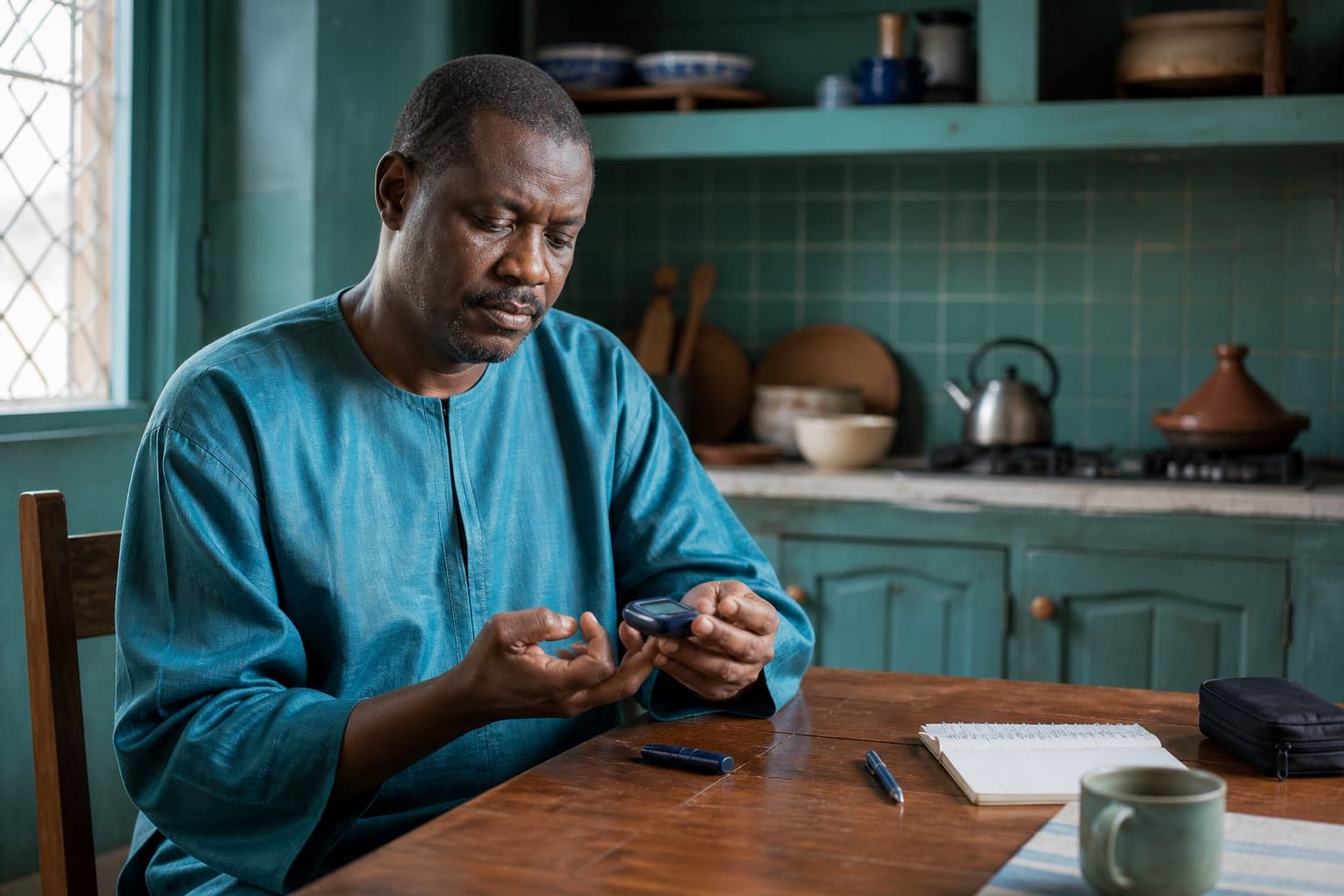
Diabetes is one of the most common chronic conditions in Senegal and West Africa. It is not a fate. Spotting the signs, checking blood glucose, and keeping regular follow-up with a health professional helps prevent many complications.
Why diabetes still matters
Many people live with diabetes for years without knowing it. Thirst, frequent urination, or unusual fatigue are sometimes blamed on heat or work. AFROCARE was built to bring patients and professionals closer around this follow-up.
This article is educational. It does not diagnose. Only a health professional can confirm diabetes and propose treatment.
Signs that should alert you
See a professional if you recognise several of these signs, especially if diabetes runs in the family.
- Intense thirst and a dry mouth
- Urinating very often, including at night
- Unusual fatigue, weight loss without dieting
- Blurred vision
- Wounds that heal slowly
- Tingling in the feet or hands
Daily follow-up
Once diabetes is known, follow-up is not only a hospital visit. It is also home glucose checks, food, walking, and the link with your doctor.
- Check your glucose as your clinician advised, and write down the values
- Keep regular meals, fewer added sugars, more vegetables and local cereals
- Walk every day if your condition allows it
- Never stop a prescribed treatment without medical advice
- On AFROCARE, Smart Check and the patient record help you keep a trace and talk with a doctor
When to go to a health facility at once
Very high glucose, repeated vomiting, confusion, fast breathing, or a foot wound that is getting worse are emergency signs. Go immediately to a health centre, clinic, or hospital.
Frequently asked questions
What are the first signs of diabetes?
Intense thirst, frequent urination, fatigue, blurred vision, and weight loss without dieting are among the most cited signs. They call for a consultation, not a diagnosis online.
Should I check glucose at home?
Yes, if a professional advised it. Note the time, the value, and what you ate. That helps the doctor adjust follow-up.
Does AFROCARE Smart Check replace a doctor?
No. It is a guidance tool. Diagnosis and treatment stay with a health professional.
Educational content. It does not replace a consultation, diagnosis, or treatment prescribed by a health professional.