All articles · Health article ·
Traditional medicine in Africa: from research to access to care
On the 24th African Traditional Medicine Day, WHO highlights how these practices can support universal health coverage — with AFROCARE’s reminder: caution and dialogue with health professionals.
AFROCARE Health Network · Health update
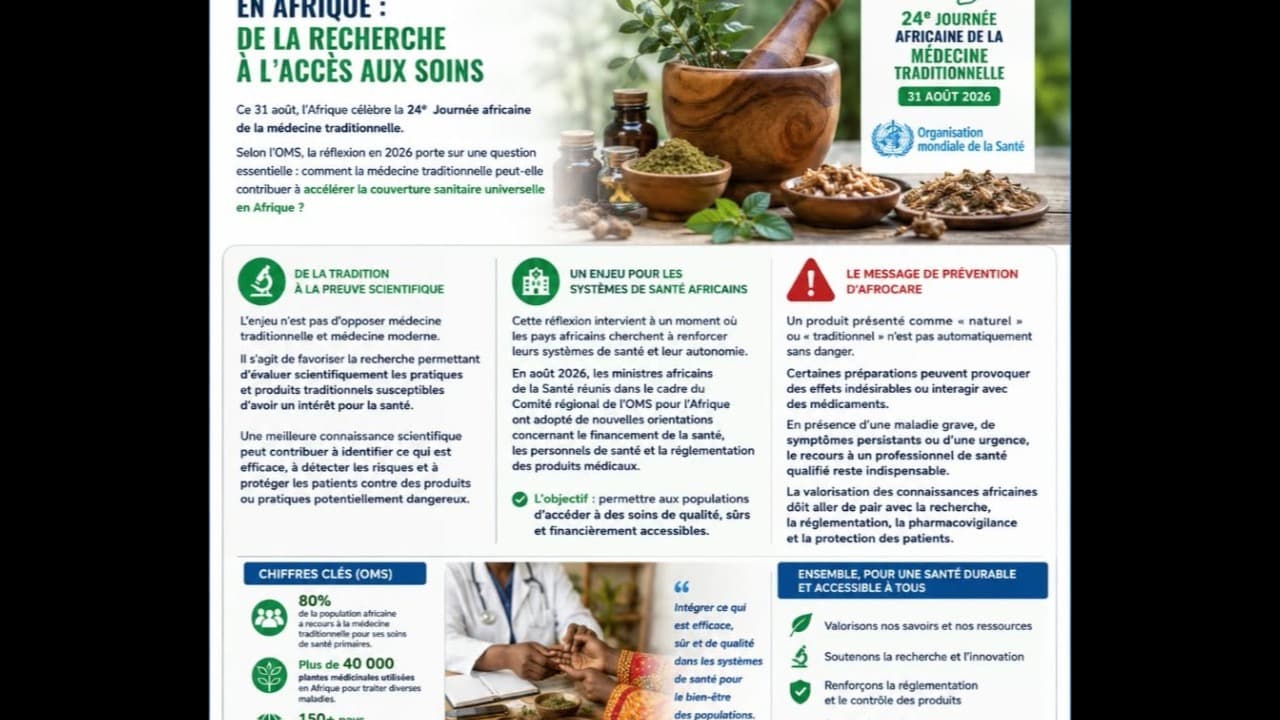
On 31 August 2026, AFROCARE looks at traditional medicine in Africa: evaluating what is effective and safe, integrating it into health systems, and protecting patients. Source: World Health Organization.
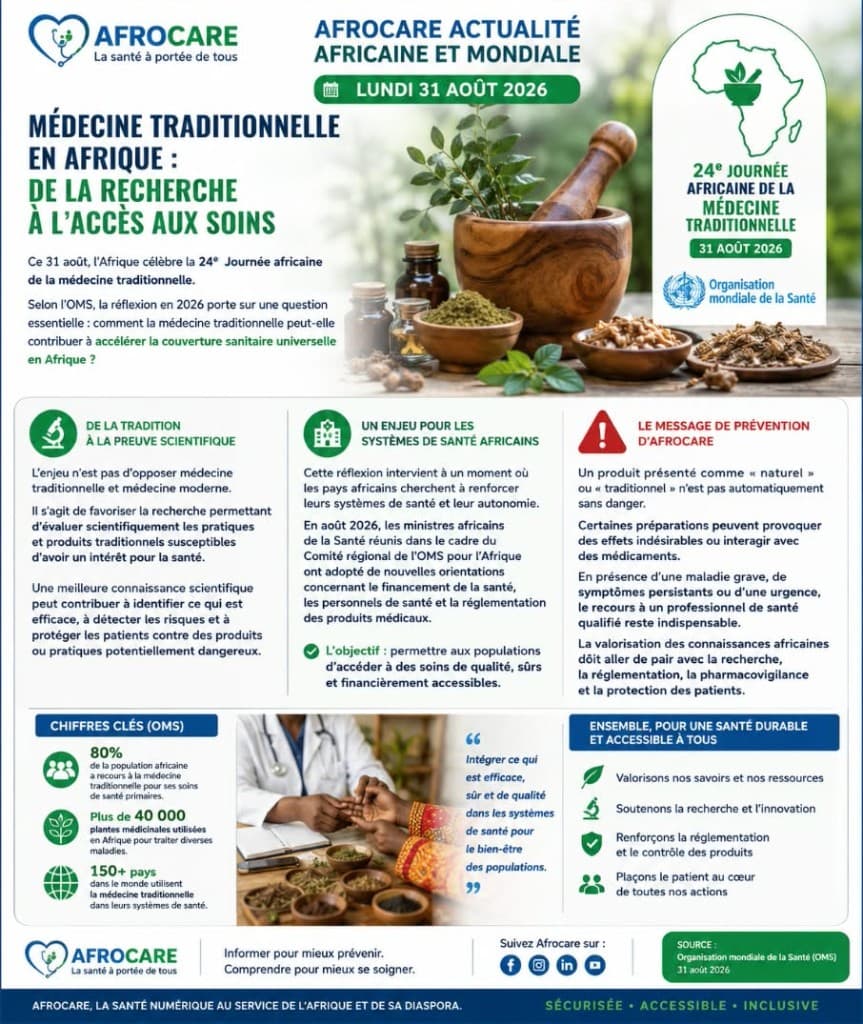
From tradition to scientific evidence
Traditional medicine is part of daily life for millions of people in Africa. For it to truly serve public health, research must evaluate products and practices: identify what works, detect risks, and keep patients safe from harmful approaches.
Evidence, quality and safety do not erase ancestral knowledge — they help value it responsibly.
A stake for African health systems
In August 2026, African health ministers met under the WHO Regional Committee for Africa. They adopted new guidance on health financing, the health workforce and the regulation of medical products.
The goal: help populations access care that is high quality, safe and financially attainable — including where traditional and modern medicine work together.
- Source: WHO / Regional Committee for Africa, August 2026
Key figures (WHO)
Benchmarks recalled by the World Health Organization on the scale of traditional medicine:
- 80% of the African population uses traditional medicine for primary health care
- More than 40,000 medicinal plants are used in Africa to treat various diseases
- 150+ countries worldwide use traditional medicine in their health systems
AFROCARE’s prevention message
“Natural” or “traditional” does not mean “risk-free”. Side effects exist; interactions with modern medicines are possible.
In case of serious illness or emergency, see a qualified health professional. Do not stop a prescribed treatment without medical advice.
- Tell your doctor or pharmacist about plants or remedies you use
- Be wary of uncontrolled products and miracle-cure claims
- Favour dialogue between traditional knowledge and modern care
Together, for sustainable health for all
Integrating what is effective, safe and high quality into health systems supports the well-being of populations.
Valuing knowledge, supporting research, strengthening regulation and putting the patient at the centre: that is AFROCARE’s line for health that is secure, accessible and inclusive.
Frequently asked questions
Does traditional medicine replace modern care?
No. It can complement care pathways when it is assessed, good quality and used carefully. In emergencies or serious illness, see a health professional.
Why does WHO focus on traditional medicine?
Because a large share of the population uses it. The challenge is to integrate what is safe and effective to accelerate universal health coverage.
Educational content. It does not replace a consultation, diagnosis, or treatment prescribed by a health professional.