All articles · Health article ·
Malaria: warning signs you should not ignore
Malaria can be severe. Spotting the signs early, sleeping under a treated net, and going to a health facility can save lives.
AFROCARE Health Network · Health article
Malaria remains a public-health emergency in Senegal and across West Africa. It is transmitted by the bite of an infected Anopheles mosquito. The earlier people recognise the signs and reach a health facility, the more severe complications can be avoided.
Why malaria still matters
Families still lose precious time when fever is first treated as a simple flu. In Senegal and the wider sub-region, malaria is still circulating. Informing people, preventing infection, and seeking care in time sit at the heart of AFROCARE: prevent, support, care.
This article expands the health fact sheet published at the platform launch. It does not replace a consultation. It helps you recognise the signs and act without delay.
Six warning signs
See a health professional if you or someone close to you has one or more of these signs, especially after a mosquito bite, travel in a risk area, or during the rainy season.
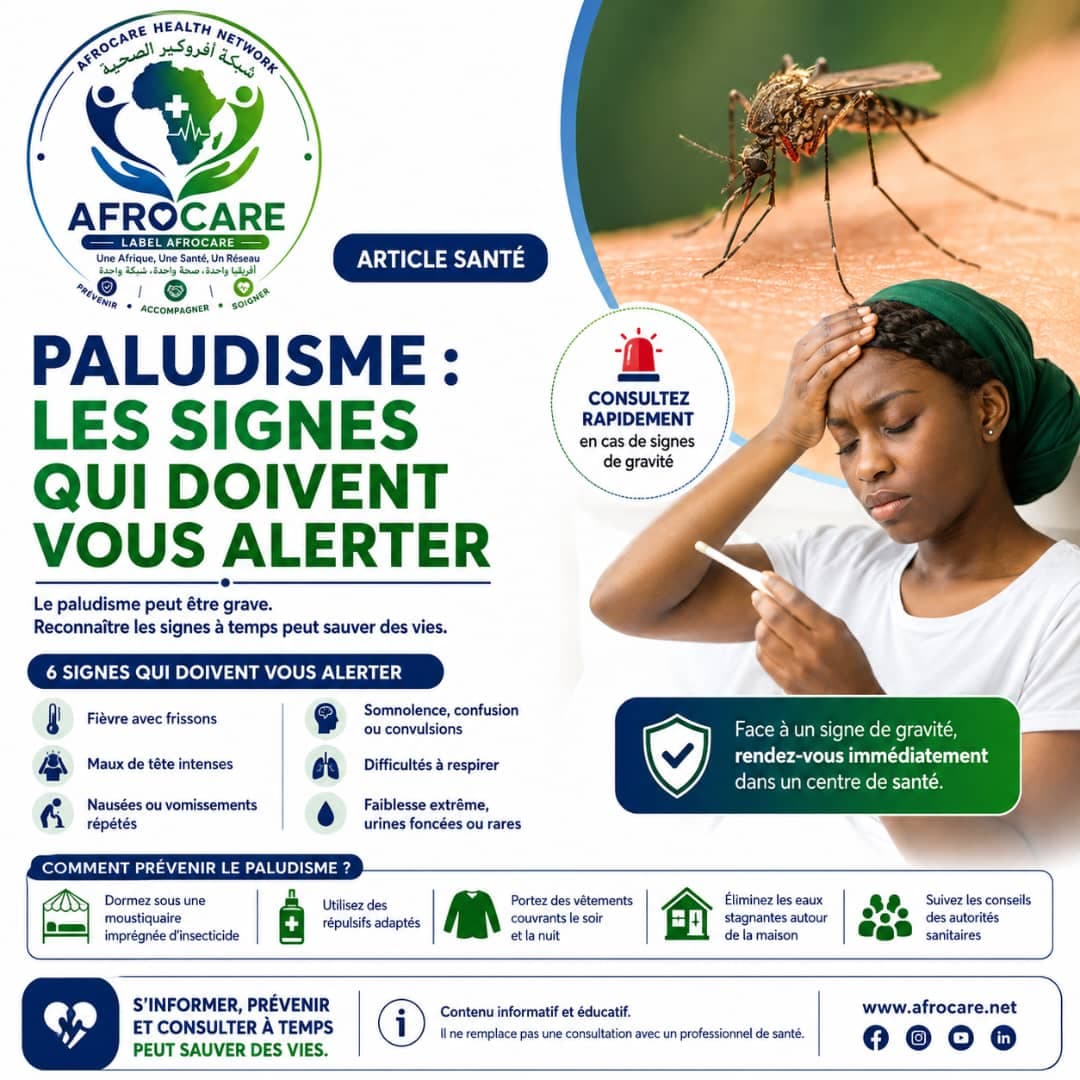
- Fever with chills
- Intense headaches
- Repeated nausea or vomiting
- Drowsiness, confusion, or seizures
- Difficulty breathing
- Extreme weakness, dark or scarce urine
When to go to a health facility immediately
Drowsiness, confusion, seizures, breathing difficulty, extreme weakness, or dark urine are danger signs. Do not wait at home. Go at once to a health centre, clinic, or hospital.
Children, pregnant women, and people already living with a chronic condition such as diabetes or anaemia need even faster care. Severe malaria can worsen within hours.
How to prevent malaria every day
Prevention starts at home. Anopheles mosquitoes bite mainly in the evening and at night. These simple steps reduce risk for the whole household.
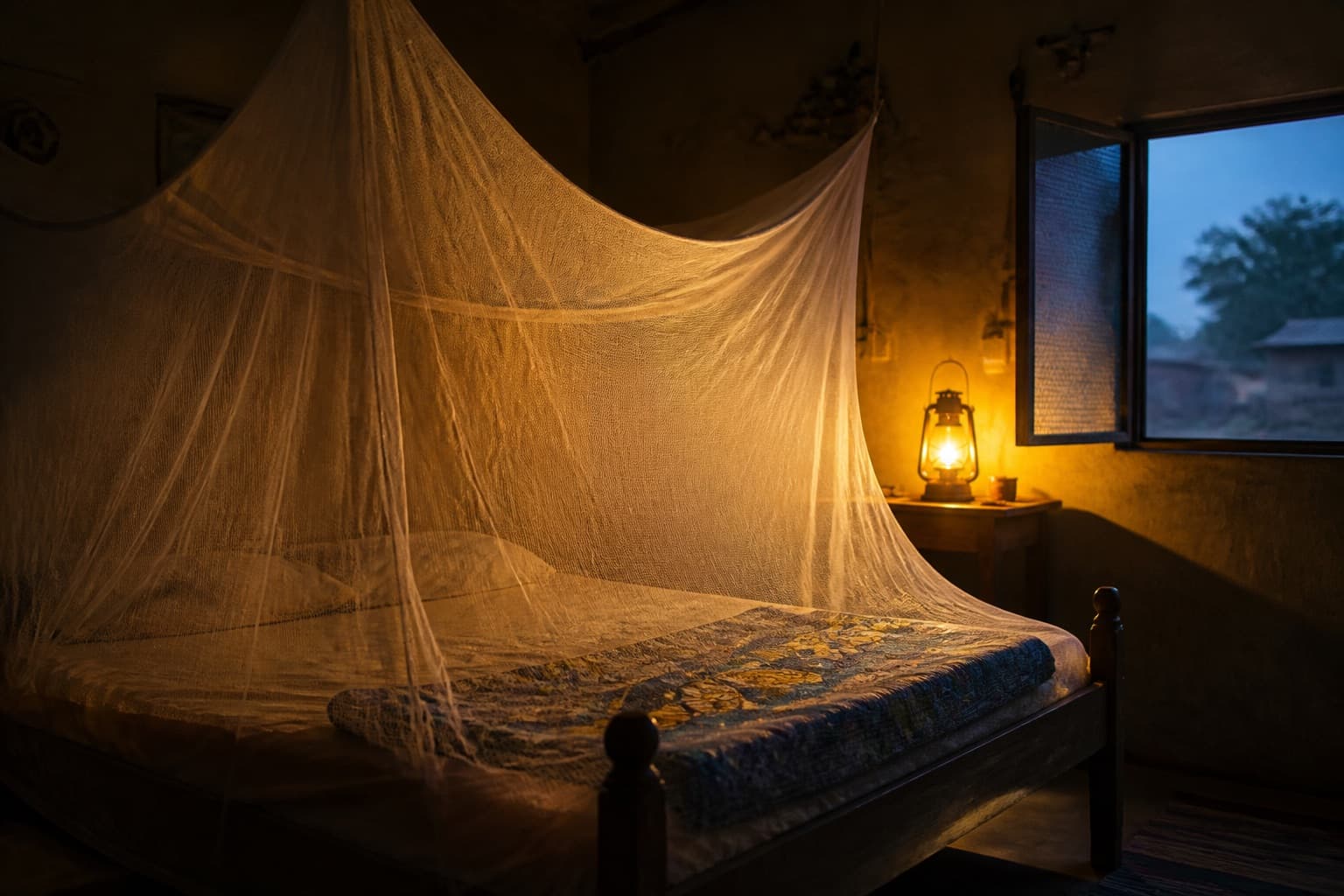
- Sleep under an insecticide-treated mosquito net, including children
- Use suitable repellents, especially in the evening
- Wear covering clothes in the evening and at night
- Remove stagnant water around the house (jars, tyres, gutters, pots)
- Follow health-authority advice and prevention campaigns
AFROCARE, to find a professional near you
If you need a practice, clinic, hospital, or pharmacy in the network, the AFROCARE directory lists health partners. Patient registration is free. The aim is to connect facilities, professionals, and patients.
Frequently asked questions
What are the first signs of malaria?
Fever with chills, intense headaches, and repeated nausea or vomiting are among the most common signs. Any fever in a malaria area should lead to a consultation.
When is malaria an emergency?
Drowsiness, confusion, seizures, breathing difficulty, extreme weakness, or dark urine are danger signs. Go to a health facility immediately.
How can I protect myself from mosquitoes in Senegal?
Sleep under an insecticide-treated net, use a repellent in the evening, wear covering clothes, and remove stagnant water around the house.
Does this article replace a medical consultation?
No. This is AFROCARE educational content. Only a health professional can diagnose and treat malaria.
Educational content. It does not replace a consultation, diagnosis, or treatment prescribed by a health professional.